
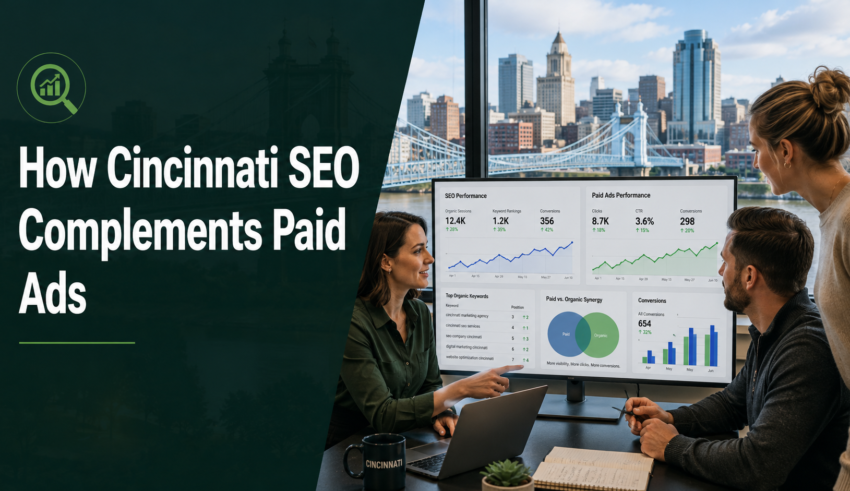
Businesses in Cincinnati often look for the fastest and most reliable ways to attract customers online. Paid ads can bring immediate visibility, while search engine optimization builds long-term organic growth. When used together, these two strategies can create a stronger digital marketing plan than either one can provide alone.
Cincinnati businesses need visibility in a competitive local market. Whether a company serves homeowners, patients, shoppers, students, or other businesses, being found online matters. Paid ads help a company appear quickly in front of people who are actively searching. SEO helps build trust, authority, and lasting search presence over time.
Understanding the Role of SEO
SEO is the process of improving a website so it can rank higher in organic search results. This includes optimizing website pages, improving content, building local relevance, strengthening technical performance, and earning authority through quality links and brand signals.
For Cincinnati companies, local SEO is especially important. A business may need to rank for searches that include city names, nearby neighborhoods, service areas, and customer intent. Examples include searches like local marketing services, home repair in Cincinnati, medical providers near me, or best service company in the area.
SEO is not instant, but it builds value over time. Once a website gains stronger rankings, it can continue to attract visitors without paying for every click.
Understanding the Role of Paid Ads
Paid ads, often called PPC or pay-per-click advertising, allow businesses to appear quickly on search engines and other digital platforms. With paid ads, companies can target specific keywords, locations, audiences, and customer behaviors.
This makes paid advertising useful for new campaigns, seasonal promotions, product launches, and urgent lead generation. A Cincinnati company can use paid ads to appear for high-value search terms even if its organic rankings are still growing.
The main limitation is cost. Once the ad budget stops, the traffic usually stops too. That is why paid ads work best when supported by a long-term SEO strategy.
Why SEO and Paid Ads Work Better Together
Paid Ads Bring Immediate Traffic
One of the biggest benefits of paid ads is speed. A business can launch a campaign and begin receiving clicks quickly. This is helpful when a company wants leads now, especially for competitive services.
SEO usually takes longer to show results. By using paid ads while SEO is developing, a company can stay visible while building future organic rankings.
SEO Builds Long-Term Value
SEO helps reduce long-term dependence on paid traffic. As a website improves its rankings, it can generate organic traffic without paying for every visitor. This gives businesses a more balanced marketing approach.
A strong SEO strategy can also make paid ads more effective. Better website content, faster page speed, clearer calls to action, and improved landing pages can help both organic visitors and paid visitors convert.
Discovering how Cincinnati SEO complements paid ads allows companies to build a comprehensive and cost-effective digital marketing strategy.
How SEO Data Improves Paid Ad Campaigns
SEO research can reveal what customers are searching for, which topics matter most, and which pages attract engagement. This information can help improve paid ad targeting.
For example, if an SEO campaign shows that a certain service page receives strong organic traffic, that same topic may be worth testing in paid ads. If a blog post attracts visitors with high intent, marketers can use that insight to create better ad copy or landing pages.
SEO can also help identify long-tail keywords. These are more specific search phrases that may have lower competition and better conversion potential.
How Paid Ads Support SEO Strategy
Testing Keywords Before Investing in SEO
SEO requires time and resources, so it is helpful to know which keywords are worth targeting. Paid ads can test keywords quickly. If a keyword produces strong leads through ads, it may also be a good keyword to target with SEO content.
This helps businesses avoid wasting time on keywords that bring traffic but do not convert.
Increasing Brand Awareness
When people see a company in both paid and organic results, the brand can appear more established. This repeated visibility can increase trust and make users more likely to click.
Paid ads can also introduce a business to new audiences. Later, those users may search for the brand directly, visit the website again, or engage with organic content.
Improving Landing Pages for Both Channels
A well-optimized landing page benefits SEO and paid ads. For SEO, the page should include useful content, clear structure, local relevance, internal links, and search-friendly headings. For paid ads, the page should have a clear offer, strong call to action, fast loading speed, and a simple path to conversion.
When businesses improve landing pages for both channels, they can increase the value of every website visit. This means more calls, form submissions, purchases, bookings, or consultations from the same amount of traffic.
Local Search and Paid Visibility in Cincinnati
Reaching Local Customers
Cincinnati businesses often serve customers in specific areas. SEO helps improve visibility in local organic searches and map results. Paid ads can target the same local audience with location-based campaigns.
Together, these strategies help businesses appear in more places across the search results page. A customer may see a paid ad, an organic listing, a local map result, and helpful website content from the same company.
Competing in Crowded Markets
Some industries are very competitive online. SEO alone may take time, and paid ads alone may become expensive. Combining the two allows companies to compete more strategically.
Paid ads can target high-intent searches right away, while SEO builds authority for related topics, service pages, and local search terms.
Measuring Performance Across SEO and Paid Ads
To get the best results, businesses should track both channels together. Important metrics include organic traffic, paid traffic, click-through rate, cost per lead, conversion rate, keyword rankings, form submissions, phone calls, and revenue.
Looking at the full picture helps marketers understand which channel is driving results and where the two channels support each other. A business may find that paid ads generate quick leads, while SEO brings lower-cost leads over time.
Conclusion
Cincinnati SEO and paid ads are not competing strategies. They work best when they support each other. Paid ads create fast visibility and immediate traffic, while SEO builds long-term authority, trust, and organic growth.
For Cincinnati businesses, combining both channels can lead to better keyword insights, stronger landing pages, improved brand visibility, and more efficient marketing spend. A balanced strategy helps companies reach customers now while building a stronger foundation for the future.
FAQs
How does SEO help paid ads?
SEO helps paid ads by improving landing pages, identifying valuable keywords, strengthening website quality, and providing content insights that can improve ad targeting and conversions.
Are paid ads better than SEO?
Paid ads are better for fast visibility, while SEO is better for long-term growth. The best option depends on the company’s goals, timeline, and budget.
Should Cincinnati businesses use both SEO and paid ads?
Yes. Using both can help businesses generate immediate traffic while building long-term organic visibility in the Cincinnati market.
Can paid ads improve organic rankings?
Paid ads do not directly improve organic rankings, but they can increase brand awareness, traffic, and data insights that support a stronger SEO strategy.
How long does Cincinnati SEO take to work?
SEO timelines vary, but many businesses begin seeing progress within a few months. Competitive industries may require more time and consistent optimization.