
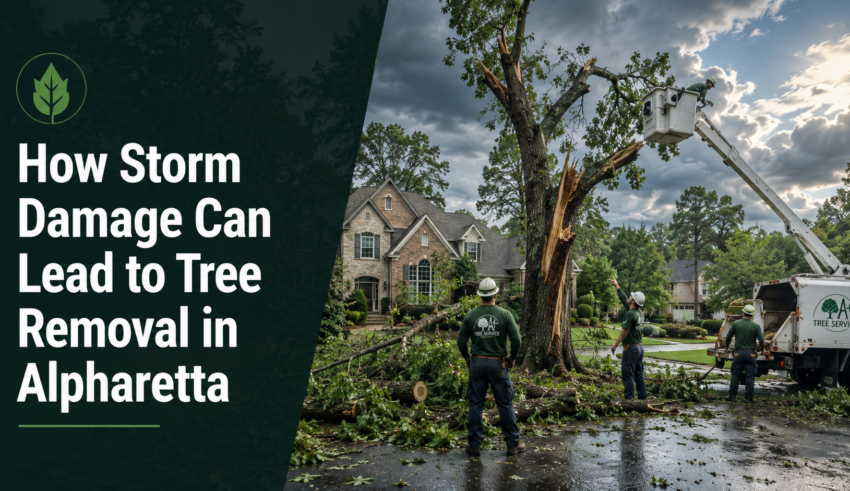
Storms can leave behind more than wet lawns and scattered branches. In Alpharetta, strong winds, heavy rain, lightning, and saturated soil can seriously weaken trees. Some storm-damaged trees may recover with proper care, but others become dangerous and need removal before they fall on homes, vehicles, fences, sidewalks, or power lines.
For homeowners and property managers, knowing when storm damage is serious can help prevent costly accidents. Tree removal is not always the first option, but when a tree becomes unstable, cracked, or partially fallen, removing it may be the safest choice.
Why Storms Are So Hard on Trees
Trees are built to handle normal weather, but severe storms can push them beyond their limits. High winds can twist branches and split trunks. Heavy rain can soften the soil around the roots. Lightning can burn internal tissue and leave hidden damage. Even trees that look strong from the outside may be weakened after a major storm.
In Alpharetta, many properties have mature trees that add beauty, shade, and value. However, older trees are often more vulnerable to storm damage, especially if they already have decay, disease, poor structure, or weak roots.
Common Types of Storm Damage
Broken or Hanging Branches
One of the most common signs of storm damage is broken limbs. Large hanging branches can fall without warning, especially after the wind shifts or the branch dries out. These limbs may damage roofs, cars, windows, and outdoor structures.
Even smaller broken branches can create safety risks if they are located above driveways, walkways, or play areas. A professional tree inspection can determine whether pruning is enough or if the tree has deeper structural issues.
Split Trunks
A split trunk is a serious warning sign. When strong winds or lightning crack the trunk, the tree may no longer be able to support its own weight. Some splits are visible from the outside, while others may appear as narrow cracks running down the bark.
If the trunk is badly split, the tree may be unstable. In many cases, removal is safer than trying to save the tree.
Leaning Trees
Not every leaning tree is dangerous, but a new lean after a storm should be taken seriously. A sudden lean can mean the roots have shifted or broken underground. This is especially concerning when the soil is wet or soft.
If the ground around the base is raised, cracked, or uneven, the root system may be failing. A leaning tree near a house, driveway, or utility line may need immediate attention.
How Rain and Saturated Soil Cause Tree Failure
Heavy rain can be just as damaging as wind. When the soil becomes saturated, tree roots may lose their grip. This can cause the entire tree to shift, lean, or fall.
Large trees depend on a stable root system. If roots are already weakened by disease, construction damage, poor drainage, or erosion, a storm can be the final event that causes failure. This is why a tree may fall after the storm has passed, not during the storm itself.
Lightning Damage and Hidden Problems
Lightning can damage a tree in several ways. It may strip bark, split the trunk, burn branches, or damage internal tissue. Sometimes, the damage is obvious. Other times, the tree may look mostly normal but begin to decline over the following weeks or months.
A lightning-struck tree should be inspected by a professional. If the structural damage is severe, removal may be recommended to prevent future failure.
When Storm Damage Requires Tree Removal
Storm-damaged tree removal in Alpharetta is often needed when strong winds, lightning, or heavy rain leave trees cracked, leaning, or partially fallen. A professional assessment can determine whether the tree can be saved or should be removed for safety. For property owners facing urgent hazards, professional tree removal in Alpharetta can help prevent further damage and restore safety after severe weather.
Tree removal may be necessary when the trunk is split, the root system is exposed, the tree is leaning toward a structure, or more than a large portion of the canopy has been destroyed. It may also be needed if the tree is blocking access, touching utility lines, or resting on a roof.
Can a Storm-Damaged Tree Be Saved?
Pruning and Structural Support
Some storm-damaged trees can recover with proper care. If the trunk is intact and the root system is stable, pruning broken branches may be enough. In some cases, cabling or bracing may help support weak limbs.
However, these solutions only work when the tree still has a strong structure. If the tree is severely cracked, hollow, diseased, or leaning dangerously, saving it may not be practical.
Professional Tree Assessment
A trained tree professional can inspect the trunk, roots, canopy, and surrounding soil. They can identify hazards that may not be obvious to the property owner. This inspection helps determine whether pruning, treatment, support, or removal is the best option.
Why Prompt Action Matters After a Storm
Waiting too long can make storm damage worse. Broken branches can fall later. Leaning trees can shift further as the soil dries or erodes. Cracked trunks can split more over time.
Prompt action helps reduce risk and can also make cleanup easier. If a tree is near a building, driveway, or road, quick removal may prevent additional property damage.
Safety Risks of DIY Tree Removal
Storm-damaged trees are unpredictable. A partially fallen tree may be under pressure, and cutting the wrong section can cause it to snap or shift suddenly. Hanging limbs, power lines, and unstable trunks make the job even more dangerous.
DIY removal can lead to injury, property damage, or electrical hazards. Professional tree removal teams have the equipment and training needed to handle dangerous situations safely.
Preventing Future Storm Damage
While storms cannot be avoided, property owners can reduce risk with routine tree care. Regular pruning removes weak or dead branches before they become hazards. Tree inspections can identify decay, disease, root problems, and poor structure.
Keeping trees healthy also improves their ability to withstand severe weather. Proper watering, mulching, and soil care can support stronger roots and better growth.
Conclusion
Storm damage can quickly turn a healthy-looking tree into a serious safety concern. In Alpharetta, strong winds, heavy rain, lightning, and saturated soil can cause cracked trunks, broken limbs, leaning trees, and root failure. Some trees can be saved with pruning or support, but others need removal to protect people and property.
After a storm, it is best to inspect your property carefully and call a professional if you see major damage. A proper assessment can help you make the safest decision and prevent a damaged tree from becoming a larger problem.
FAQs
How do I know if a storm-damaged tree needs removal?
A tree may need removal if it is leaning suddenly, has a split trunk, exposed roots, major canopy damage, or large hanging limbs. A professional inspection can confirm the safest option.
Can a tree survive after being damaged by a storm?
Yes, some trees can recover if the damage is minor and the root system is stable. Trees with severe trunk, root, or structural damage may not be safe to keep.
Is a leaning tree always dangerous?
Not always. Some trees naturally grow at an angle. However, a new lean after a storm may indicate root failure and should be inspected quickly.
Should I remove broken branches myself?
Small branches on the ground may be safe to clean up, but hanging limbs, large branches, and damaged trees should be handled by professionals.
How soon should I call a tree service after storm damage?
Call as soon as possible if the tree is near a structure, driveway, road, or utility line. Fast action can reduce safety risks and prevent more damage.